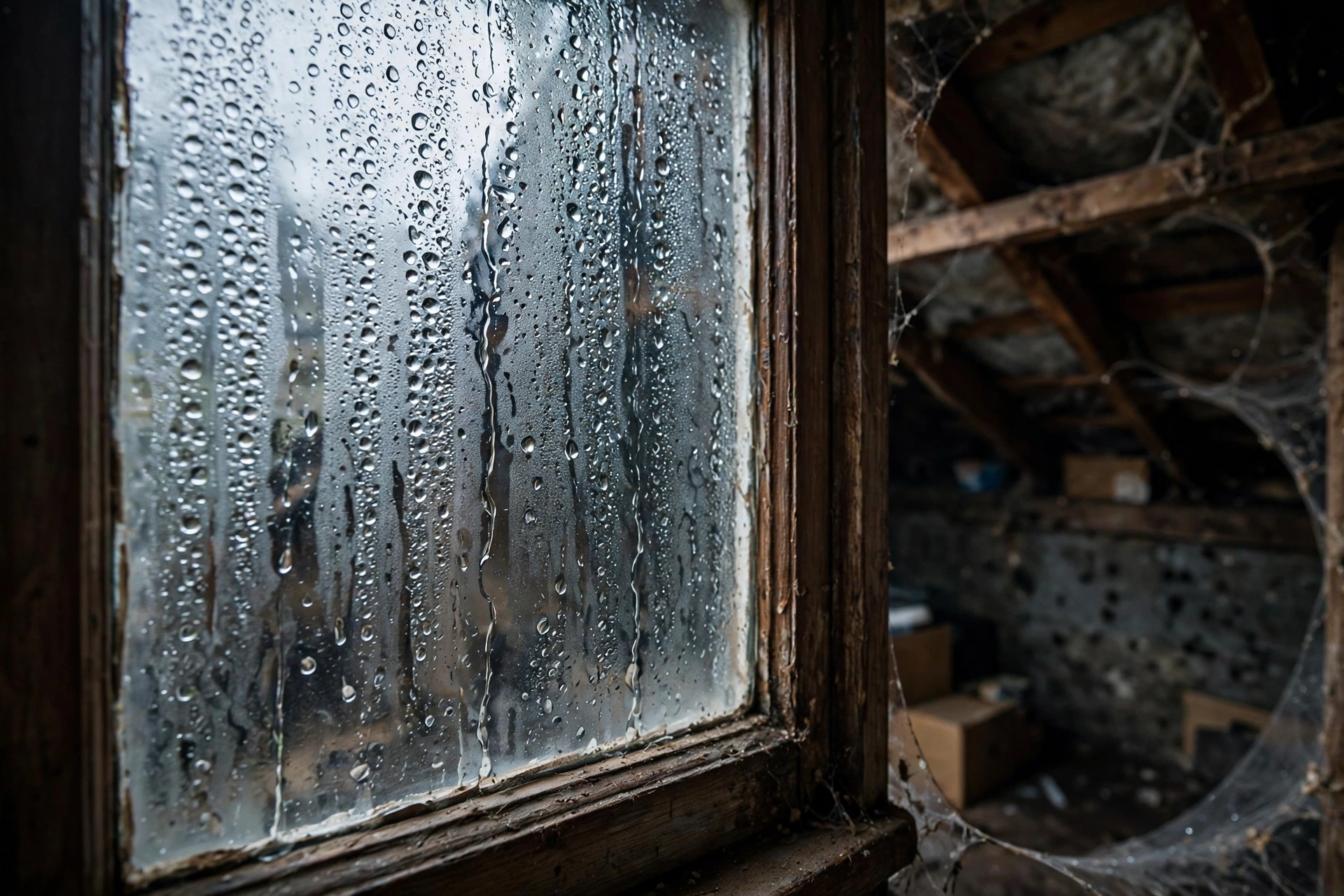
Condensation is the quietest form of water damage in a home. It never announces itself with a burst pipe or a storm; it simply appears, day after day, as warm moist air meets a cold surface — and by the time you notice the stain on the ceiling or the musty smell in the basement, the framing behind the drywall may already be rotting. Attics, basements, and exterior wall cavities are the three places where condensation does its worst damage, precisely because the damage stays hidden the longest.
The direct answer is this: condensation is prevented by controlling two things at once — indoor humidity and cold surfaces. Keep indoor relative humidity between 30 and 50 percent, stop warm moist air from leaking into attics and wall cavities, and insulate cold surfaces so they stay above the dew point. No single fix works alone; the solution is always a combination of humidity control, air sealing, and insulation.
Why Condensation Forms Inside Attics, Basements, and Wall Cavities
Condensation is simple physics. Air holds water vapor, and warm air holds more of it than cold air. When warm, moist indoor air touches a surface colder than the dew point — the temperature at which the air can no longer hold its moisture — the vapor turns to liquid water on that surface. In winter, the cold surfaces are the underside of the roof deck in the attic, the concrete walls of the basement, and the inner face of exterior sheathing inside wall cavities.
Everyday life produces the moisture. Cooking, showering, washing clothes, drying laundry indoors, and even breathing add liters of water vapor to a home’s air each day. A wet or damp basement can generate more moisture than all other sources combined. When that moisture has nowhere to go, it migrates through the house, finds the coldest surfaces, and condenses — feeding mold, rotting wood, and peeling paint for months before anyone sees a symptom.
What Are the Early Warning Signs of Hidden Condensation Damage?
Because condensation damage hides inside cavities, the early signs are indirect:
Attic — frost on the underside of the roof deck in winter, wet or compressed insulation, rusted nail heads, and dark staining on the sheathing.
Basement — a persistent musty smell, damp spots on the floor or lower walls, efflorescence (the white salty crust left when water evaporates from concrete), and mold in corners and behind stored items.
Inside wall cavities, the signs show up on the surface: peeling paint, bubbling wallpaper, buckled or rotting siding outside, and spalling brick where trapped moisture freezes and expands. Condensation on windows is a useful early warning too — if water regularly runs down the glass in winter, indoor humidity is high enough to be condensing somewhere you cannot see. Treat window condensation as a gauge, not just a nuisance.
Attic Condensation: Air Leaks, Ventilation, and Insulation Gaps
Attic condensation is almost always an air leakage problem first and a ventilation problem second. Warm air from the living space rises through gaps around light fixtures, plumbing stacks, attic hatches, and chimney chases, carrying moisture straight into a cold attic. There it meets the underside of the roof deck, condenses, and drips back into the insulation, which loses its insulating value when wet and stays wet for weeks.
The fix starts below, not above, in this order:
Seal every air leak between the living space and the attic with caulk, foam, or metal flashing, and tighten and weatherstrip the attic hatch.
Make sure bathroom and kitchen exhaust fans vent outside — never into the attic, where they dump moist air directly onto cold wood.
Check the insulation: it should cover the attic floor evenly without gaps or compression, and soffit vents must stay clear of insulation so air can move.
Balanced intake and exhaust ventilation helps, but ventilation alone cannot fix an attic that is being fed moist air through unsealed gaps.
Basement Condensation: Ground Moisture and Cold Concrete
Basements are condensation magnets for two reasons: the concrete walls and floor stay cold year-round, and the ground outside supplies a near-endless stream of moisture through the concrete itself. Warm, humid summer air entering a cool basement drops below its dew point on the walls and floor, and the result is damp surfaces, musty odors, and mold on anything stored against the wall.
Start by keeping bulk water out: slope the soil away from the foundation, keep gutters clean and downspouts discharging well away from the house, and fix any foundation cracks. Inside, a properly sized dehumidifier is the workhorse — set it to hold relative humidity around 45 percent and drain it to a sink or sump so it never sits full and idle. Insulating the basement walls with rigid foam applied directly to the concrete warms the interior surface above the dew point and is the most durable long-term fix.
Condensation Inside Exterior Wall Cavities: The Hidden Risk
Concealed condensation inside wall cavities is the most destructive form of the problem because it can rot framing for years before showing a single stain. It happens when warm, moist indoor air leaks outward through gaps in the wall — around outlets, windows, and baseboards — and condenses on the cold inner face of the exterior sheathing. Poorly installed vapor retarders make it worse, and in some older homes the wall has no air barrier at all.
The solution is to stop the air, not just to add insulation. Seal the gaps: caulk around window and door frames, seal penetrations for pipes and wiring, and add gaskets behind outlet covers on exterior walls. A continuous air barrier on the warm side of the insulation, properly sealed at seams and edges, prevents moist air from reaching the cold sheathing. If a wall already shows signs of concealed damage, open a small inspection section before finishing over it.
Controlling Indoor Humidity: The First Line of Defense
Humidity control is the cheapest and most effective condensation prevention there is. Aim to hold indoor relative humidity between 30 and 50 percent. Below 30 percent, the air feels dry, wood shrinks, and respiratory irritation increases; above 50 percent, condensation risk climbs sharply, and above 60 percent mold growth becomes likely. A simple hygrometer, costing only a few dollars, tells you where you stand — measure in the basement and the upstairs bedrooms, not just the living room.
- Everyday habits matter as much as equipment:
- Run the bathroom exhaust fan during showers and for 20 minutes afterward.
- Use the range hood every time you cook, and vent the clothes dryer outside.
Avoid drying laundry or firewood indoors, and keep indoor temperatures steady rather than letting the house cool sharply overnight.
In winter, if humidity climbs above 40 percent, turn off the humidifier — most homes in cold weather need no added humidity at all, and the moisture that causes condensation is usually the moisture the household itself produces.
Ventilation and Dehumidification That Actually Work
Ventilation removes moisture, but only when it moves air in the right direction. Spot ventilation — a bathroom fan that actually exhausts outside and a range hood that vents outdoors — handles the biggest moisture sources at their origin. Whole-house ventilation, such as a heat recovery ventilator, brings in fresh air while recovering heat from the outgoing stream, and it suits tight, well-sealed modern homes.
Dehumidifiers handle the moisture that ventilation cannot reach, especially in basements and in humid summers. Size matters: a unit too small will run constantly and still lose ground, while a unit that is properly sized and set to maintain about 45 percent relative humidity will cycle normally and keep the space dry. In very humid climates, a whole-house dehumidifier tied into the HVAC system is more effective than a portable unit, and it avoids the chore of emptying buckets. Whatever you choose, make sure exhaust fans and dryers vent outside — venting them into the attic or crawl space simply moves the condensation problem to a colder, darker place.
Air Sealing and Insulation Fixes That Stop Condensation at the Source
Air sealing and insulation work as a pair, and neither is enough alone. Insulation without air sealing lets warm moist air flow straight through it to the cold surface behind; air sealing without insulation leaves surfaces cold enough to condense even the small amount of moisture that remains. The most valuable air sealing targets are the ones homeowners rarely see: the gaps where the wall meets the ceiling, penetrations for wiring and plumbing, recessed lights, and the rim joist where the house sits on the foundation.
Attics — an even blanket at the depth your climate zone requires, with baffles keeping the soffit vents open.
Basements — rigid foam against the concrete warms the wall surface above the dew point.
Walls — dense-packed cellulose or properly installed batts fill the cavity completely, with no gaps, compression, or voids.
Done together, air sealing and insulation raise cold surface temperatures and cut the moisture supply at the same time — which is the only way to stop condensation for good.
When Condensation Damage Needs a Building Professional
Some condensation problems are beyond DIY fixes. Call a building professional or a qualified contractor if you find mold covering a large area, framing that feels soft or crumbles, insulation that is saturated through, or a musty smell that persists after humidity is controlled. Structural rot, widespread mold, and water that appears without an obvious source all call for an inspection that opens the assembly and finds the real moisture path.
A professional can also run the diagnostics a homeowner cannot: a blower door test to find the air leaks, an infrared camera scan to find cold spots and missing insulation, and a moisture meter survey of framing and sheathing. If the home has knob-and-tube wiring, asbestos, or lead paint, opening walls needs specialist handling anyway. The cost of an inspection is small compared with the cost of rebuilding a rotted wall that was patched over instead of repaired.
Final Thoughts: Keeping Attics, Basements, and Walls Dry Year-Round
Condensation is not a mystery and it is not bad luck — it is warm moist air meeting a cold surface, and both halves of that equation are under your control. Hold indoor humidity between 30 and 50 percent, seal the air leaks that carry moisture into cold cavities, and insulate so surfaces stay warm. Do those three things and the attic stays dry, the basement stops smelling musty, and the framing inside your walls lasts as long as the house.
Condensation in Attics, Basements, and Walls: Homeowner FAQs
What indoor humidity level prevents condensation?
Aim for 30 to 50 percent relative humidity. In cold winter weather, 30 to 40 percent is safer, because the colder it is outside, the lower the humidity must be to avoid condensation on windows and inside walls. Use a hygrometer to check, and adjust with ventilation or a dehumidifier.
Why does condensation appear in my attic in winter?
Warm, moist air from the living space leaks into the attic through gaps around lights, pipes, and the attic hatch, then condenses on the cold underside of the roof deck. The fix is air sealing those gaps and making sure exhaust fans vent outside, not adding more vents alone.
Will a dehumidifier fix a damp basement?
A dehumidifier controls the symptom — humid air — but it cannot fix bulk water coming through the foundation. Use it together with exterior grading, working gutters, and crack repairs. If the basement has standing water or leaking walls, fix the water entry first, then run the dehumidifier.
Is condensation inside a wall cavity dangerous?
Yes, because it stays hidden while it rots framing, ruins insulation, and grows mold. Signs include peeling paint, soft drywall, buckled siding, and a musty smell with no visible source. If you suspect concealed condensation, get an inspection before covering the area with new finishes.
Should I add more attic ventilation to stop condensation?
Ventilation helps, but it is not the main fix. If warm moist air is leaking into the attic, extra vents just give that air a slightly different path. Seal the air leaks first, keep insulation even and soffit vents clear, and then make sure ventilation is balanced between intake and exhaust.
Can houseplants and showers really cause condensation problems?
They contribute. A family of four produces several liters of water vapor a day through breathing, cooking, showering, and laundry. That is normal, and a healthy house handles it — but only if exhaust fans work, humidity is monitored, and air leaks are sealed. The moisture itself is not the problem; the lack of control over it is.