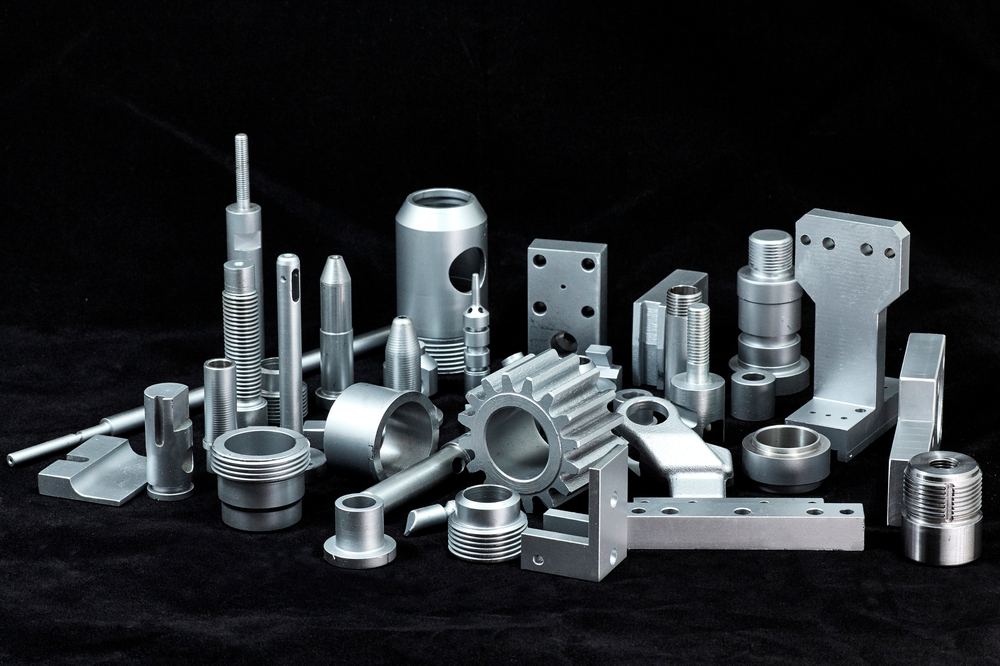
In modern industrial manufacturing, precision is everything. Whether you are engineering specialized components for aerospace, heavy mining, agricultural machinery, or medical devices, the quality of your finished product depends directly on the accuracy of your machined parts. A fraction of a millimeter can mean the difference between a high-performing assembly and a catastrophic failure in the field.
However, turning complex CAD designs into flawless metal or composite components requires more than just high-tech equipment. It requires partnering with a skilled, reliable partner. Choosing the right partner determines whether your project stays on schedule and within budget or gets stalled by production defects. Here is what you need to know to evaluate and select the ideal production partner for your industrial needs.
1. Core Capabilities: CNC Milling, Turning, and Multi-Axis Precision
Quick Answer: A qualified machining partner should offer advanced multi-axis CNC milling, turning, and Swiss machining capabilities to handle complex part geometries with tight tolerances across various raw materials.
When evaluating production shops, start by analyzing their equipment suite and technical versatility. Modern high-precision manufacturing relies heavily on Computer Numerical Control (CNC) technology to maintain exact repeatability across both small prototype runs and high-volume production cycles.
Key processes to look for include:
- Multi-Axis CNC Milling (4-Axis and 5-Axis): Allows cutting tools to approach a workpiece from multiple angles simultaneously, creating intricate geometric shapes, deep pockets, and complex contours without requiring multiple re-fixtures.
- CNC Turning and Lathe Operations: Ideal for cylindrical components like shafts, pins, bushings, and threaded couplings, ensuring strict concentricity.
- Electrical Discharge Machining (EDM): Essential for cutting extremely hard metals or machining delicate, razor-thin shapes that traditional rotary cutting tools cannot achieve.
In addition to standard metal alloys, verify that the shop has proven experience working with specialized materials—such as hardened tool steel, titanium, brass, aluminum alloys, and high-density polymers—suited to your application’s stress requirements.
2. Choosing Custom Solutions Over Commodity Production
Quick Answer: Partnering with a specialized custom shop provides tailored engineering support, custom material selection, and specialized surface finishing designed specifically for heavy-duty or unique field applications.
Not all machining projects fit into standard, mass-produced molds. Heavy industries—such as mining, underground extraction, and civil construction—often require heavy-duty components that must withstand extreme torque, abrasive dust, and high impacts. Standard off-the-shelf parts simply cannot endure these environments.
Working with an experienced Machining manufacturer ensures your custom components are crafted to meet exact operational demands. From heavy-duty replacement gears and hydraulic manifolds to custom structural pins, a dedicated custom manufacturer brings hands-on metalworking expertise to every project, refining raw CAD files for efficient production and long-term durability.
Custom manufacturing also encompasses specialized secondary services—including heat treating, protective plating, anodizing, and precision grinding—so your parts arrive fully finished and ready for immediate assembly.
3. Strict Quality Control and Tolerances Inspection
Quick Answer: Top-tier machine shops verify part accuracy through robust quality management systems, utilizing CMM inspection, ISO certifications, and detailed material traceability.
High-tech cutting machines are only as reliable as the quality assurance protocols monitoring them. A minor dimensional variation caused by tool wear or thermal expansion can render an entire production batch unusable.
To protect your project from costly defect rates, ensure your manufacturing partner adheres to rigorous machining quality control standards:
- Coordinate Measuring Machine (CMM) Audits: Automated CMM probes measure physical part dimensions against original 3D models down to microscopic tolerances.
- ISO Quality Certifications: ISO 9001 certification confirms that the facility maintains standardized, repeatable quality management processes.
- Material Traceability: Reputable shops provide Mill Test Reports (MTRs) to verify that raw metals meet exact metallurgical composition standards.
4. Design for Manufacturability (DFM) Collaboration
Quick Answer: Design for Manufacturability (DFM) is a collaborative review process where machinists analyze part designs to eliminate unnecessary complexity, lower production costs, and accelerate lead times.
One of the most valuable services a high-caliber machining partner offers occurs long before cutting tools touch raw metal: the DFM review. Engineers often design parts that look perfect on a digital screen but prove unnecessarily difficult, expensive, or slow to cut in the real world.
Through DFM collaboration, experienced machinists identify potential manufacturing bottlenecks:
- Overly Tight Tolerances: Relaxing non-critical surface tolerances reduces machining cycle time and tooling costs significantly without compromising part function.
- Deep Internal Corners: Replacing sharp square internal corners with rounded radii allows standard end mills to cut at higher speeds without tool chatter.
- Standardizing Thread Sizes: Using standard thread tap sizes simplifies tooling setup and lowers unit pricing.
Embracing custom metal fabrication and DFM early in the design stage transforms good concepts into cost-effective, easily manufacturable components.
5. Myth vs. Fact: Misconceptions About Machine Shops
Clearing up common misconceptions helps procurement managers make informed sourcing decisions:
- Myth:“The lowest quote always provides the best overall project value.”
- Fact: Ultra-low bids often mask hidden costs, such as cheap raw materials, lack of secondary inspection, high defect rates, and delayed shipping schedules.
- Myth:“5-axis CNC machining is always necessary for every precision part.”
- Fact: While 5-axis machines excel at complex, organic shapes, simple parts are often cut more economically on well-calibrated 3-axis mills or multi-spindle lathes.
- Myth:“Automation eliminates the need for skilled human machinists.”
- Fact: Advanced CNC machines require skilled machinists to program toolpaths, select correct cutting speeds and feeds, and troubleshoot material variations in real time.
6. A Partner Evaluation Checklist for Sourcing Managers
Use this decision checklist when evaluating potential machining partners:
- Equipment Lineup: Does the shop own modern 3-, 4-, or 5-axis CNC machines and turning centers?
- Precision Inspections: Are CMM reports and optical comparators used for quality verification?
- DFM Support: Does the engineering team offer design feedback to optimize part costs?
- Material Expertise: Do they have documented experience cutting your required alloys or polymers?
- Turnkey Finishing: Can they manage heat treatment, plating, and assembly in-house or through certified networks?
- Lead Time Reliability: Do they maintain a proven track record for on-time delivery across production runs?
Summary of Key Takeaways
Sourcing high-precision metal parts requires finding a true manufacturing collaborator committed to quality, accuracy, and operational efficiency.
- Prioritize Versatility: Look for shops capable of handling multi-axis CNC precision machining across a diverse range of raw materials.
- Verify Quality Audits: Ensure your partner utilizes CMM verification, ISO certifications, and complete material traceability.
- Leverage DFM Insight: Involve experienced machinists early in the design phase to simplify geometry, reduce unit costs, and speed up production timelines.
By choosing a machining manufacturer that balances advanced technology with deep hands-on expertise, you protect your supply chain, lower defect risks, and ensure your finished components perform reliably in the field.