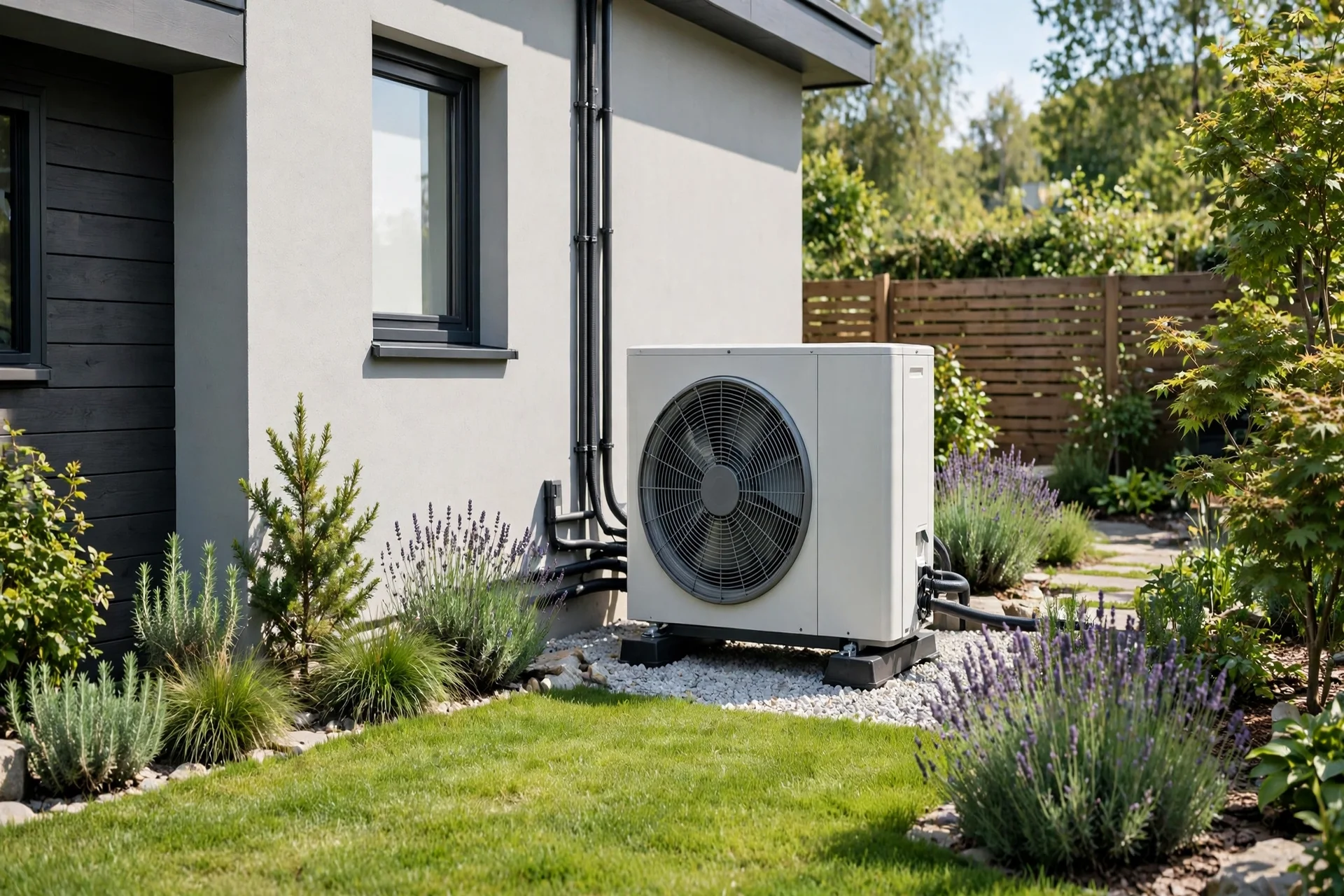
An outdoor heat pump does its hardest work with the least protection: it sits outside in every season, pulling thousands of cubic feet of air through a delicate coil every hour, while leaves, grass clippings, pollen, and dust try to clog it. The fix is mostly simple housekeeping, done on a schedule. Keep two feet of clear space on every side, five feet open above the unit, rinse the coil gently a few times a year with the power off, and the system keeps its efficiency instead of slowly suffocating under a mat of debris.
Why a Heat Pump Suffers First When Airflow Shrinks
A heat pump moves heat instead of making it, and that trick depends entirely on air volume. In winter it must pull enough heat out of cold outdoor air to warm the house; in summer it must dump indoor heat into hot outdoor air. Either way, the outdoor coil needs a massive, uninterrupted flow of air across its fins. When leaves and grime narrow that flow, the refrigerant cannot absorb or release heat properly, run times stretch longer, and the compressor works harder for the same result.
The penalty is measurable. A coil clogged with wet debris can cut system efficiency by up to 20 percent, and the U.S. Department of Energy notes that a well-maintained heat pump uses 10 to 25 percent less energy than a neglected one. The damage goes beyond the power bill: restricted airflow can freeze the indoor coil in cooling mode, trip high-pressure limits in heating mode, and shorten compressor life. None of that happens overnight, which is exactly why it is so easy to ignore until the first expensive repair.
How Much Clearance Does an Outdoor Unit Really Need?
The U.S. Department of Energy recommends a strict minimum of 24 inches of completely clear space on all sides of the outdoor cabinet, and at least 60 inches of open vertical space above it so exhaust air can escape without falling back into the unit. Those numbers are minimums, not ideals — manufacturers often specify larger clearances in their installation manuals, and the larger figure always wins.
The two-foot rule is not arbitrary. The fan pulls air inward through the coil, and a tight ring of shrubs or stored items creates a vortex that drags loose leaves and mulch straight onto the fins. Five feet overhead matters just as much: the fan blows exhaust upward, and a low roof overhang, a deck, or a dense tree canopy can push that warm or cold air back down into the intake, forcing the unit to reprocess its own exhaust. Measure the perimeter with a tape, mark it with a couple of discreet landscape pins, and trim anything that crosses the line.
Reading the Debris Map Around Your Unit
Every yard produces a different debris load, and the first step is learning where yours comes from. Walk the unit after a windy day and look at what has collected on the grilles: broad leaves point to a nearby deciduous tree, pine needles to a conifer, white fluff to a cottonwood in spring, and fine dust to a gravel path or a dry lawn. Each source has its own season and its own fix, and knowing the source keeps you from fighting the same battle blindly.
- Deciduous trees: the heaviest load arrives in a few autumn weeks, when wet leaves plaster themselves to the fins.
- Conifers and pines: needles fall all year and wedge between fins where a brush cannot easily reach them.
- Cottonwood and dandelion fluff: spring fluff mats the coil surface and must be rinsed off before it bakes on.
- Grass clippings: mowing toward the unit sprays clippings into the coil; always discharge the mower away from it.
- Dust and pollen: dry, windy sites coat the fins in fine grime that slowly insulates the coil from the air.
Once you know the sources, the calendar writes itself. Autumn leaf drop calls for weekly checks during the peak weeks, cottonwood season calls for a rinse every couple of weeks in spring, and dusty sites benefit from a monthly look at the coil face. A five-minute inspection beats a two-hour deep clean every time, and it catches problems while they are still a surface film rather than a baked-on mat.
A Seasonal Clearing Routine That Takes Fifteen Minutes
The most effective protection is a short routine repeated on schedule, not a heroic annual clean. Do it in spring and autumn at minimum, and monthly during the heaviest debris seasons. Turn the power off at the outdoor disconnect first, every single time — the fan can start without warning, and the coil fins are sharp enough to cut.
- Clear the perimeter: pull leaves, twigs, and grass out of the two-foot zone by hand, and trim back any branches crossing it.
- Brush the cabinet: sweep stuck leaves off the side grilles with a soft-bristle brush, working top to bottom.
- Rinse the coil: spray gently with a garden hose from the inside out where the cabinet allows, or from outside in at low pressure.
- Check the base: clear the drain pan and the pad, and make sure the unit still sits level and 4 to 8 inches off the ground.
- Inspect the fins: look for bent or flattened sections and leave any straightening to a technician with a fin comb.
The rinse deserves a warning of its own: never use a pressure washer on a heat pump coil. The high-pressure stream flattens the thin aluminum fins permanently, and flattened fins block airflow far worse than the dirt you were trying to remove. A garden hose at household pressure is all the force the coil ever needs, and a gentle rinse two or three times a year keeps the metal clean enough to transfer heat properly.
Coil Cleaning Without Bending a Single Fin
The outdoor coil is a stack of paper-thin aluminum fins wrapped around refrigerant tubing, and it is the most fragile part of the whole installation. Dirt builds up on the fin faces first, then works deeper into the gaps until air cannot pass at all. The right cleaning method is patient and gentle: power off, loose debris brushed away by hand, then a slow rinse that lets water carry the grime out of the fin pack rather than driving it deeper.
Coastal homes need extra attention. Salt air accelerates corrosion on the coil and the cabinet, and manufacturers such as Carrier advise washing coastal outdoor units about every three months. A coil coating or a seacoast protection package from the manufacturer adds a layer of defence, but it does not replace rinsing. If the fins already show white crust or pitting, book a professional coil cleaning and ask the technician to check for refrigerant leaks at the same time, because corrosion and leaks often arrive together.
Which Guards, Screens, and Covers Actually Help
The market is full of accessories that promise to protect an outdoor unit, and most of them do more harm than good. A solid cover that wraps the whole cabinet traps moisture, invites nesting animals, and blocks the airflow the unit needs the moment it starts. A mesh screen sounds safer but can still choke intake if the mesh is too fine or if it is mounted tight against the coil.
| Accessory | Verdict | Why it helps or hurts |
|---|---|---|
| Open-top rain hood | Helpful | Shields the fan from falling debris while leaving airflow open |
| Coarse mesh guard, spaced off the coil | Helpful | Stops large leaves; must sit at least 2 inches off the fins |
| Fine mesh screen tight to the cabinet | Avoid | Restricts intake airflow and mats with debris quickly |
| Full winter cover | Avoid | Traps moisture, hides damage, and blocks defrost drainage |
| Elevated pad or wall bracket | Helpful | Lifts the unit 4 to 8 inches for drainage and snow clearance |
| Decorative fence panels | Use with care | Fine if kept 2 feet away on all sides with an open top |
The safest rule is simple: nothing should touch the cabinet, and nothing should sit within two feet of it except open air. A rain hood mounted above the fan with clear space underneath is the rare exception that genuinely helps, because it keeps falling leaves and ice off the fan without touching the airflow path. Everything else should be judged by the same test — if it narrows the air path, it costs more in efficiency than it saves in protection.
Snow, Ice, and Storm Debris: Winter Protection That Still Breathes
Winter brings a different debris problem. Snow can bury the lower half of the unit, ice can lock the fan, and a storm can throw branches against the coil. The unit is designed to defrost itself, but it cannot do that if snow blocks the base drain or if ice seals the top grille. After a heavy snowfall, clear snow from the top and sides by hand and check that meltwater can drain away from the pad instead of refreezing underneath.
Do not wrap the unit for winter and do not pile snow against it as a windbreak. A heat pump runs all winter, and any cover that blocks intake or traps defrost water will cause more damage than the weather it was meant to stop. Keep the area around the base free of ice dams, and if the unit sits under a roof edge where icicles form, fit a simple open canopy above it — high enough to leave the full five feet of exhaust clearance — so falling ice cannot strike the fan.
Where to Plant, Pave, and Store Around the Unit
The ground around the unit is part of the installation, and a few landscaping choices make debris control almost automatic. Hardscaping beats planting: a gravel or paver apron extending two feet out from the pad keeps grass clippings and mulch away from the intake, drains rainwater away from the base, and gives you a clean surface to stand on while you work. Low ground cover is fine beyond that line, but anything tall or dense belongs farther away.
- Keep shrubs and ornamental grasses at least 3 feet away so they cannot grow into the clearance zone.
- Never stack firewood, bins, or garden tools against the cabinet or inside the two-foot perimeter.
- Route the mower discharge away from the unit, and keep the grass inside the perimeter short.
- Avoid mulch beds touching the pad; windblown mulch chips are a steady source of coil debris.
Think of the two-foot zone as a small utility yard, not a garden bed. A neat gravel apron with a couple of stepping stones looks intentional, stays clear with a quick rake, and signals to everyone in the household that this is working space, not storage space. The unit repays that respect with steadier efficiency and fewer service calls.
Warning Signs That Debris Has Already Hurt Performance
A heat pump rarely fails suddenly from debris; it declines gradually, and the symptoms are easy to miss until the bill arrives. Longer run times for the same indoor temperature, a system that struggles on mild days, ice forming on the outdoor coil in winter, or the indoor coil freezing in summer all point to restricted airflow. A sudden jump in energy use with no change in thermostat settings is another classic signal.
Do not keep running a unit that shows these signs while you wait for a convenient weekend. Restricted airflow stresses the compressor, and compressor damage is the most expensive repair a heat pump can need. Clear the perimeter, rinse the coil gently, and if performance does not recover within a day, call a qualified technician. Mention the debris history when you book the visit — it helps the technician check the coil, the fan motor, and the refrigerant charge in the right order.
Heat Pump Airflow FAQs: Keeping Debris Off Your Outdoor Unit
How often should I clear debris from my heat pump?
Check the unit monthly and clear the perimeter whenever leaves or grass have collected. During autumn leaf drop or cottonwood season, check weekly. Rinse the coil gently two or three times a year, and always after a storm that throws branches or heavy dust against the cabinet.
Can I cover my heat pump in winter?
No. A heat pump runs all winter and needs full airflow to work and to defrost itself. A cover traps moisture, blocks drainage, and can hide damage until spring. Clear snow by hand instead, and fit an open canopy above the unit if falling ice is a problem.
Is it safe to hose down the outdoor coil?
Yes, with the power off at the disconnect and a garden hose at normal pressure. Spray gently from the inside out where the cabinet allows, or from outside in at low pressure. Never use a pressure washer — it flattens the thin aluminum fins and permanently blocks airflow.
Why does my heat pump freeze up in winter?
Some frost during defrost cycles is normal, but a thick ice coat usually means restricted airflow or a defrost fault. Leaves matted on the coil are a common cause, because the coil cannot pull in enough air and its temperature drops below freezing. Clear the coil and call a technician if the ice returns.
How close can shrubs grow to the outdoor unit?
Keep all planting at least 2 feet from the cabinet, and 3 feet for shrubs that grow quickly. The U.S. Department of Energy recommends 24 inches clear on all sides and 60 inches open above the unit, and the manufacturer's own clearances apply whenever they are larger.
Final Thoughts: Give Your Heat Pump Room to Breathe
Protecting an outdoor heat pump is less about products than about space and habit. Two feet of clear ground on every side, five feet open above, a gentle rinse a few times a year, and a quick look after every storm will keep the coil breathing and the compressor unstressed for years. Skip the tight covers and fine screens, keep the mower discharge pointed away, and treat the two-foot zone as working space. The reward is the quiet kind: steady comfort, lower bills, and a system that lasts as long as it was designed to.